ANATOMY
LOWER BODY

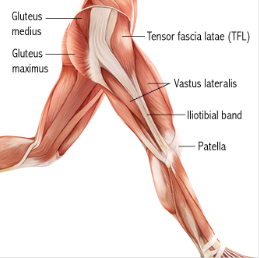
LOWER BODY ANATOMY
In REFORM, lower body programming is not “legs.”
It is specific muscle targeting through:
tension
alignment
range of motion
and coaching
Your job is to understand what each muscle does, then cue in a way that helps clients find it, feel it, and fatigue it.
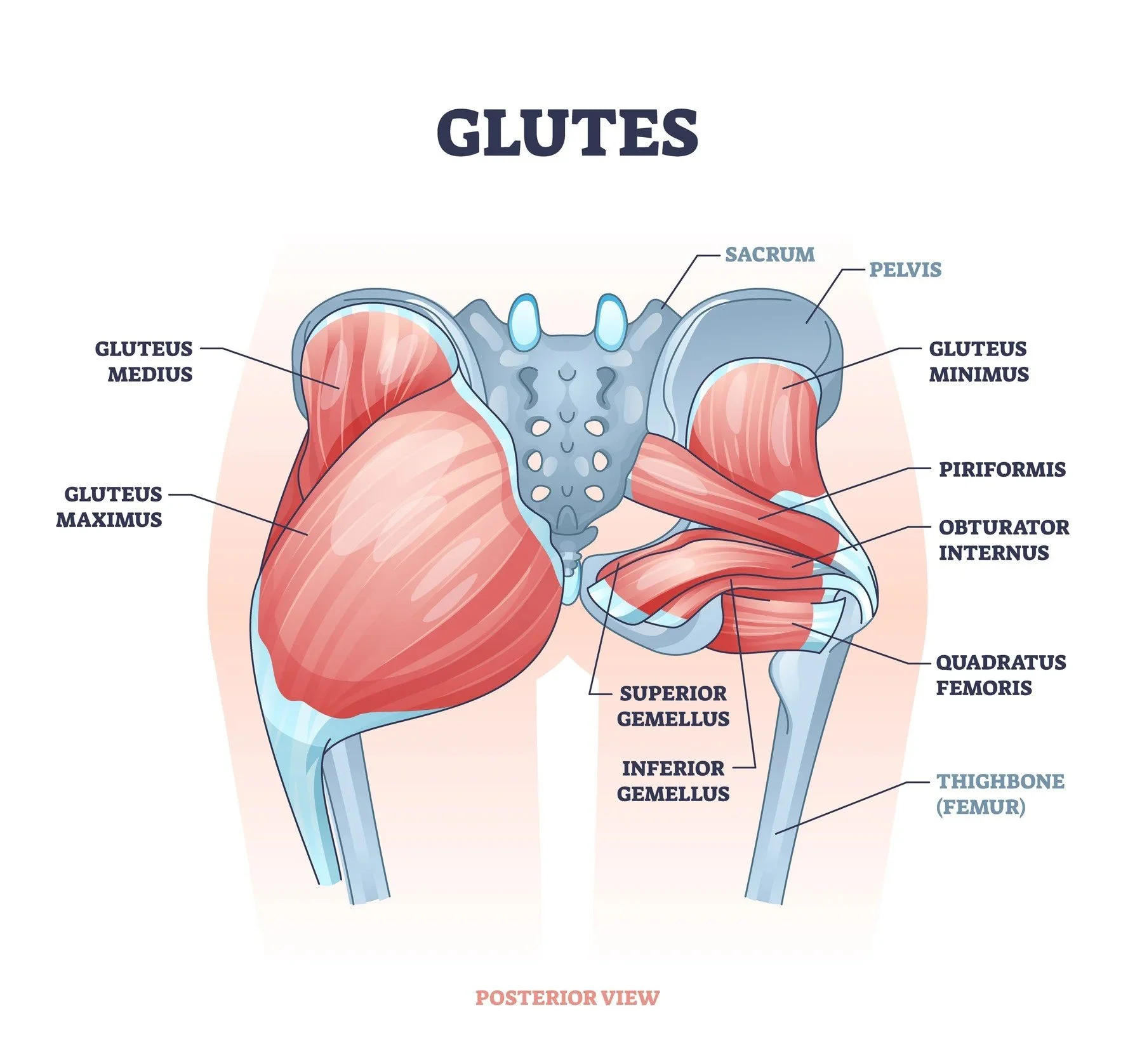
1) CENTER GLUTES (GLUTEUS MAXIMUS)
What it is:
The gluteus maximus is the largest and most superficial glute muscle. This is the “center glute” and the primary driver of power.
Primary functions:
Hip extension (driving the leg back)
External rotation (turning the thigh outward)
Pelvic stability
Upright posture support
How it shows up in class:
Center glutes dominate in:
lunges
bridges
squats
hip hinges
heavy carriage pushes
REFORM coaching focus:
Center glutes should feel like:
power
burn
strength
and “push through the heel”
2) OUTER GLUTES (GLUTE MEDIUS + MINIMUS + DEEP ROTATORS)
What it is:
Outer glutes are primarily the gluteus medius and gluteus minimus, supported by deep hip rotators (like piriformis).
These muscles create the “side seat” burn and are critical for:
hip stability
alignment
knee tracking
balance
Primary functions:
Hip abduction (leg moves away from midline)
Pelvic stabilization (preventing hip drop)
Lateral rotation of the thigh
Other contributors (secondary):
Tensor fasciae latae (TFL)
Deep rotators (piriformis)
Lateral lower leg stabilizers (fibularis/peroneals)
How it shows up in class:
Outer glutes dominate in:
lateral lunges
standing outer glute presses
side seat series
single-leg balance work
REFORM coaching focus:
Outer glutes should feel like:
shake
stability
deep fatigue
and “the hip holding the pelvis level”
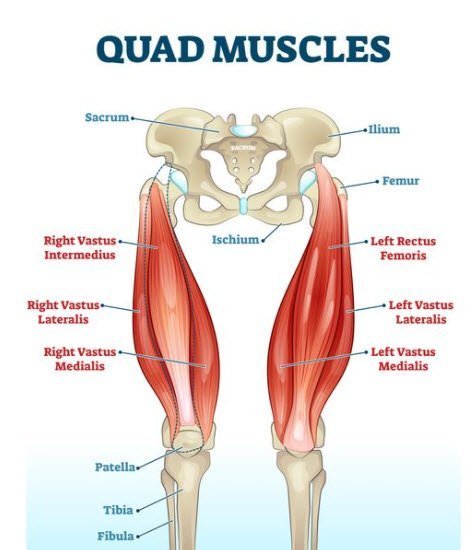
3) INNER THIGHS (HIP ADDUCTORS)
What it is:
The inner thighs are the adductor group:
adductor longus
adductor brevis
adductor magnus
gracilis
pectineus
They are responsible for pulling the leg inward and stabilizing the pelvis and knee.
Primary functions:
Hip adduction (pulling the thigh toward midline)
Hip stabilization and balance
Assisting hip flexion and internal rotation
Gracilis also assists knee flexion
How it shows up in class:
Inner thighs dominate in:
carriage adductor work
wide stance squats
inner thigh presses
stabilization work when knees track correctly
REFORM coaching focus:
Inner thighs should feel like:
deep fatigue quickly
a burn near the upper inner thigh
and “pulling back to center”
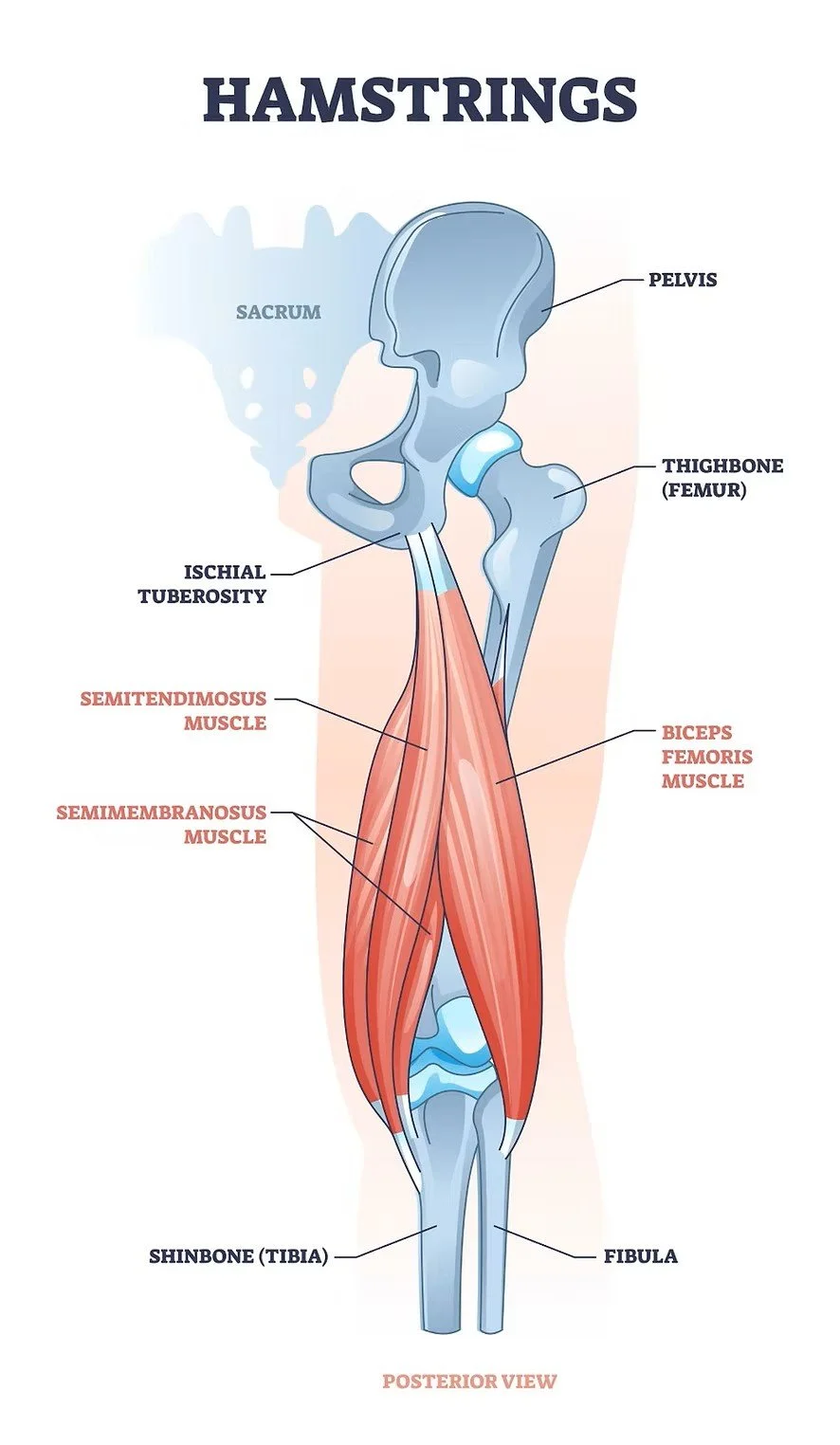
4) HAMSTRINGS
What it is:
The hamstrings are a group of three muscles in the back of the thigh:
biceps femoris
semitendinosus
semimembranosus
They are a major driver of athletic movement and posterior chain strength.
Primary functions:
Hip extension (driving the leg back)
Knee flexion (bending the knee)
Leg rotation (depending on which hamstring head is active)
Knee stabilization
Specific functions:
Biceps femoris: lateral rotation + hip extension + knee flexion
Semitendinosus & semimembranosus: medial rotation + hip extension + knee flexion
How it shows up in class:
Hamstrings dominate in:
hip hinges
deadlift patterns
hamstring curls
bridges (especially heels elevated or long lever)
posterior chain lunge patterns
REFORM coaching focus:
Hamstrings should feel like:
pull
shake
deep back-leg fatigue
and “heels dragging the carriage”
THE STANDARD (FOR ALL LOWER BODY WORK)
In REFORM, lower body training must be coached with:
clear target muscle language
knee/hip alignment cues
tension-based programming
slow tempo
and progressions/modifications
Clients should not just “move.”
They should know what they’re training and why.
LOWER BODY ANATOMY — RUBRIC (INSTRUCTOR)
Score each category 1–5
(1 = missing | 3 = inconsistent | 5 = excellent)
1) Muscle Identification ____/5
Instructor correctly identifies what muscle group is being trained in each block.
2) Cue Accuracy ____/5
Cues match the correct muscle function (extension, abduction, adduction, etc.).
3) Tension Direction ____/5
Instructor coaches clients into max tension (not just range of motion).
4) Alignment + Safety ____/5
Instructor consistently reinforces:
knee tracking
hip positioning
pelvic stability
5) Coaching Clarity ____/5
Clients understand what they should feel and where they should feel it.
6) Corrections + Adjustments ____/5
Instructor notices compensation patterns and redirects effectively.
TOTAL: ____ /30
Notes:
What they coached well:
What to improve next class: